
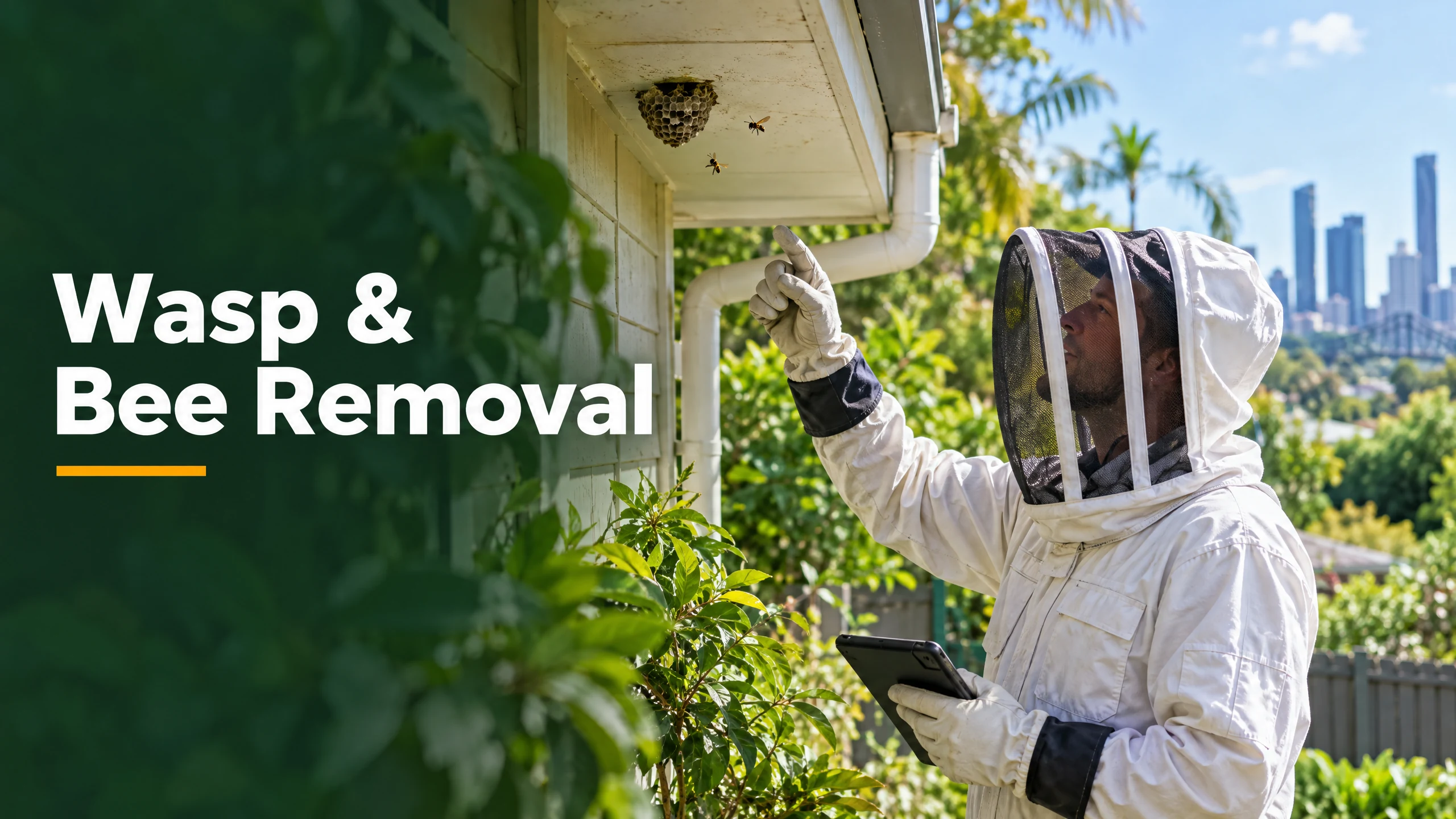
Nest by the door? Same day service
Wasp & Bee Removal Sandgate
Paper wasps build under eaves, carports and pergolas around Sandgate, and bee swarms settle in trees and walls each spring. The nest is treated and taken down, and the eave or branch is treated so they do not rebuild.
Bee swarms are collected and rehoused wherever they can be reached safely.
- 24/7 emergency line
- Same day bookings in Sandgate
- Upfront pricing, no hidden costs
- Nest removed, not just sprayed
Get a Quote
Tell us what you have seen and we will call you back.
- for nests near doors and play areas
- Same day
- busiest wasp months in SEQ
- Sep–Mar
- suburbs covered
- 367
- phones answered
- 24/7
Right now
Found a Wasp Nest or a Swarm? Do This First
In Sandgate paper wasp nests are often found under the eaves near a door or above the clothesline.
Bee swarms in spring are usually calm. Either way, keep clear and leave it alone until we arrive.
Stung and having trouble breathing?
Call 000 now. Swelling of the face or throat, wheezing or feeling faint after a sting can be anaphylaxis, which is a medical emergency.
-
1
Move everyone away from the nest
Bring children and pets inside and keep the door on that side shut. Mark the spot so nobody mows or trims near it.
-
2
Do not spray, hose or knock it down
Fly spray rarely reaches the whole nest, and a broom or hose sends every wasp after the nearest person. Most stings we hear about happen this way.
-
3
Do not block a hole in a wall or the ground
Insects sealed in a cavity look for another way out, and that is often through a vent or downlight into the house.
-
4
Take a photo from a safe distance
A zoomed-in photo from at least five metres tells us whether it is wasps or bees and how high the nest is.
-
Then call us on 07 3916 7673. Answered day and night, with same day visits on most days.
What we do
Our Wasp and Bee Removal Services in Sandgate
Whatever is building on your property, our technicians remove it safely and treat the site so it does not come back.
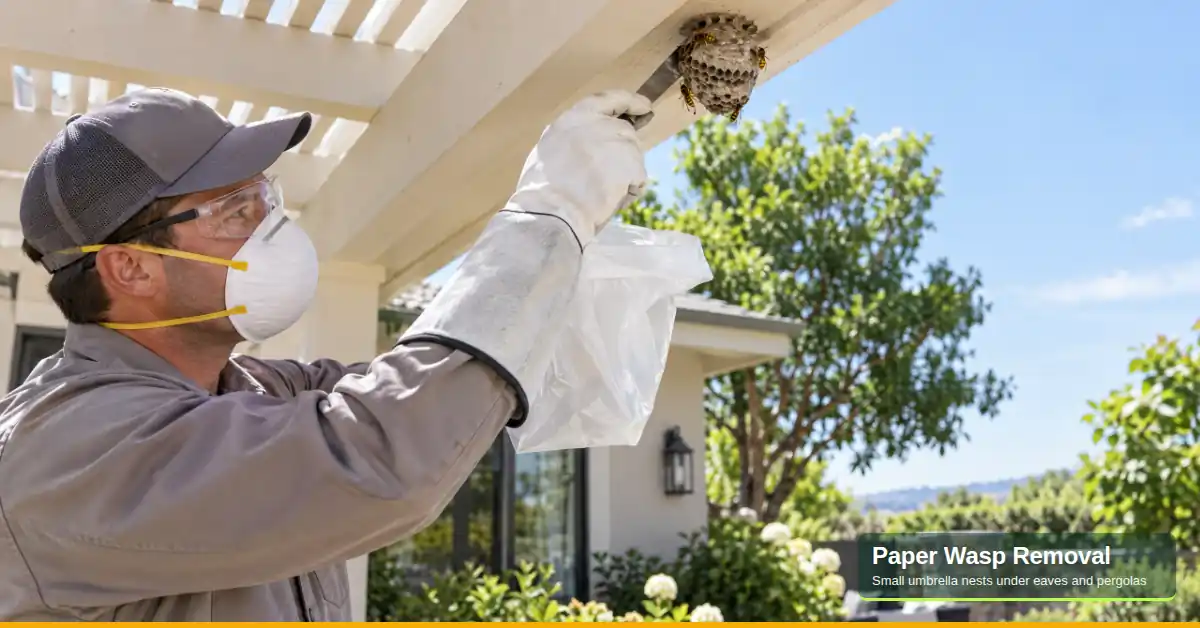 Paper Wasp RemovalNests under eaves, pergolas and fences
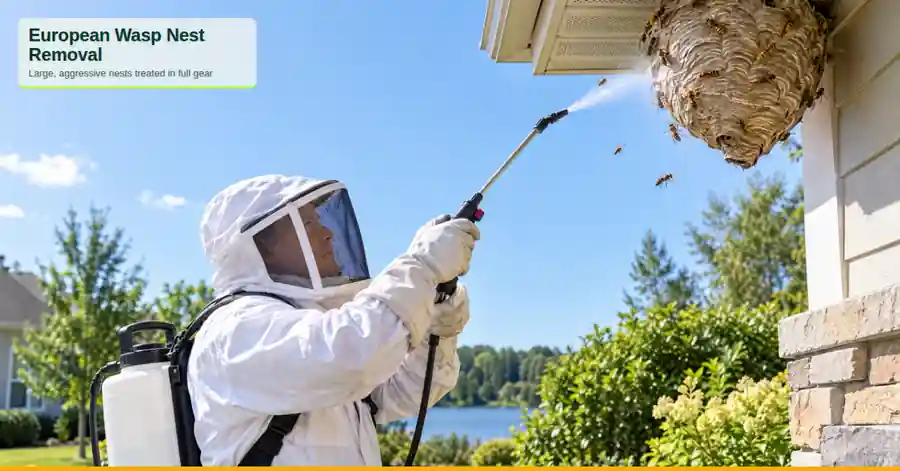 European Wasp Nest RemovalNests located, treated and destroyed
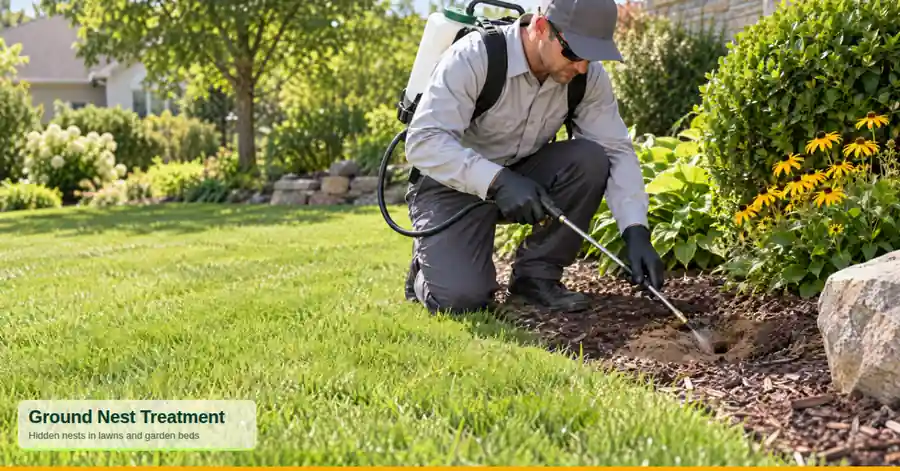 Ground Nest TreatmentLawns, garden beds and retaining walls
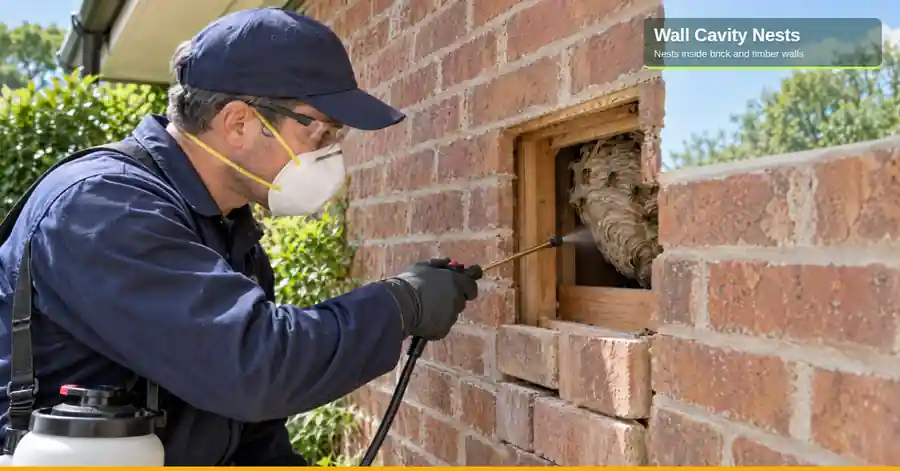 Wall Cavity NestsTreated through the entry point
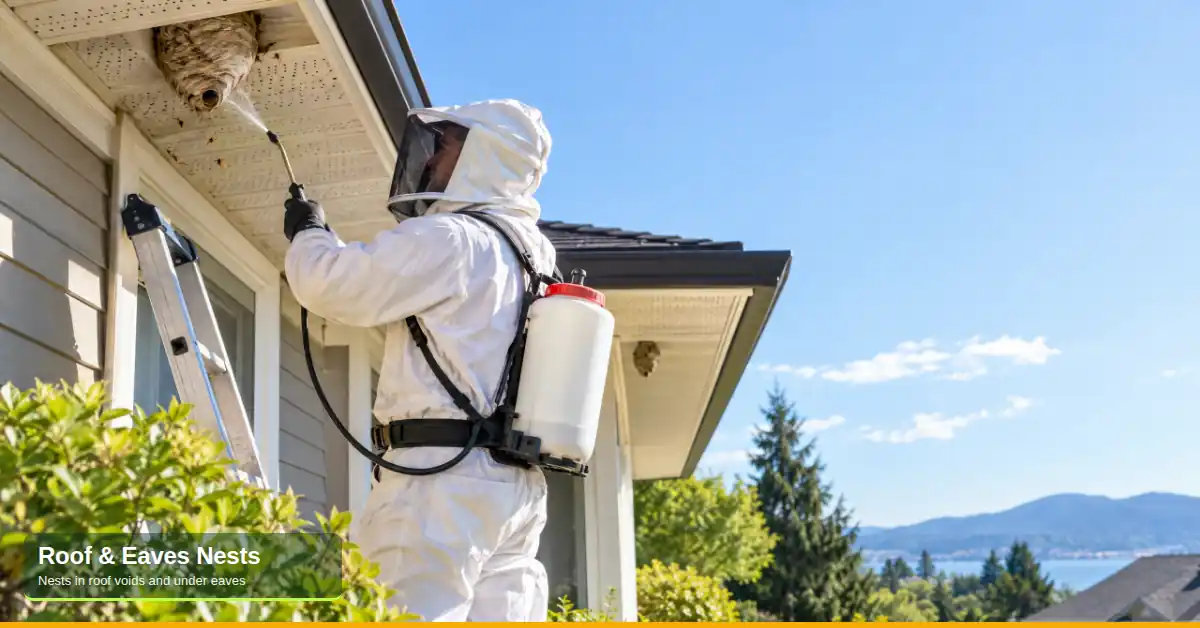 Roof & Eaves NestsRoof voids, soffits and ceilings
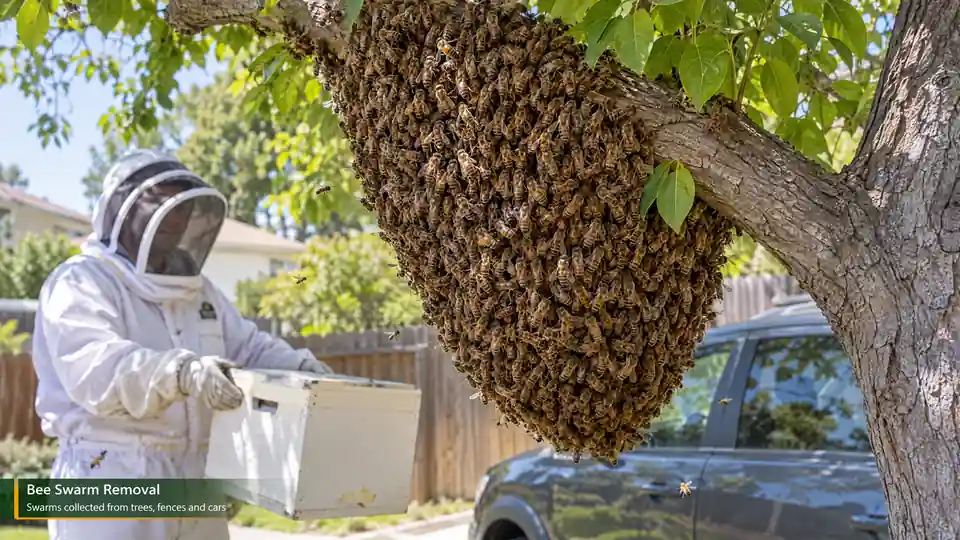 Bee Swarm RemovalSwarms boxed and rehomed where access allows
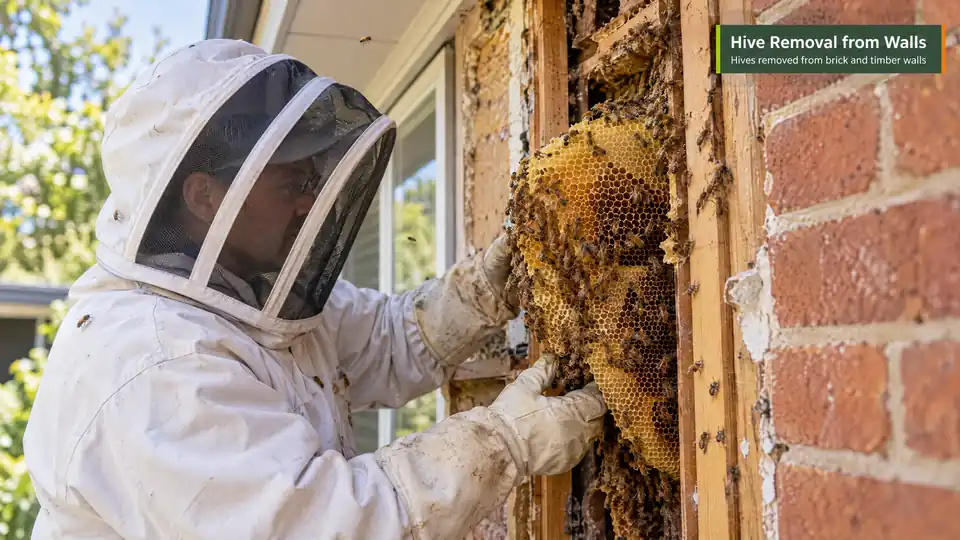 Bee Hive RemovalSettled hives in walls, roofs and trees
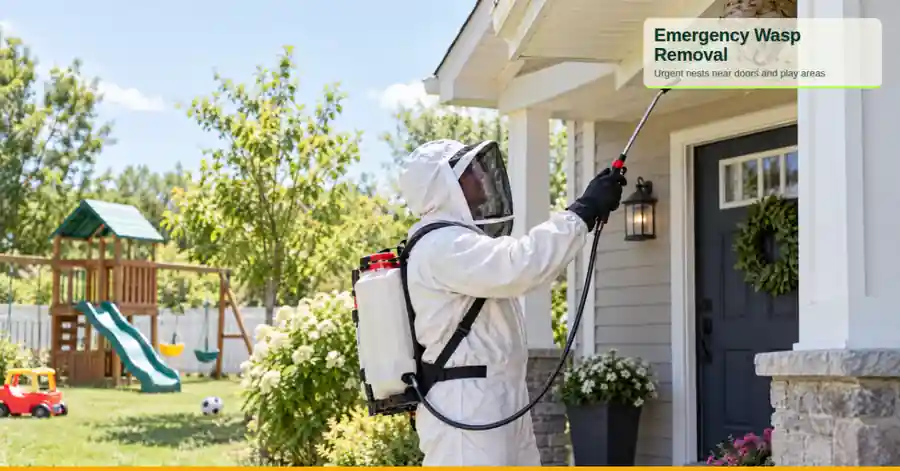 Emergency Wasp Removal24/7 for nests near doors, schools and play areas
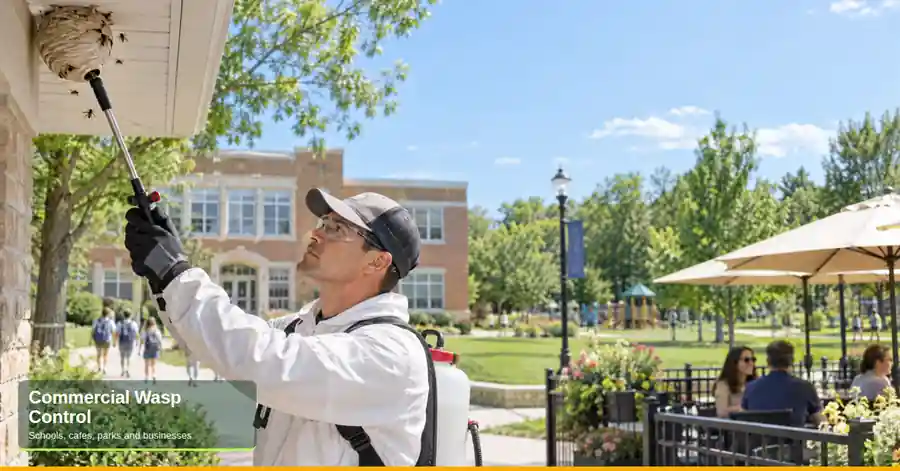 Commercial Wasp ControlCafes, schools, parks and strata sites
Sound familiar?
Common Wasp and Bee Problems in Sandgate
Where the nest is tells us what to bring and how long the job will take. Find yours below.
"A grey papery nest under the eaves"
A paper wasp nest. They hang from eaves, gutters, pergolas and window awnings and grow from a few cells in spring to dinner-plate size by late summer.
"Wasps in the hedge I was trimming"
Paper wasps love dense shrubs, lillypillies and climbers. The nest is often at chest height, which is why hedge trimming causes so many stings.
"Mud tubes on the wall and in the shed"
Mud dauber wasps. They are solitary and rarely sting, but their nests block vents, weep holes, tap fittings and machinery.
"A ball of bees on our tree"
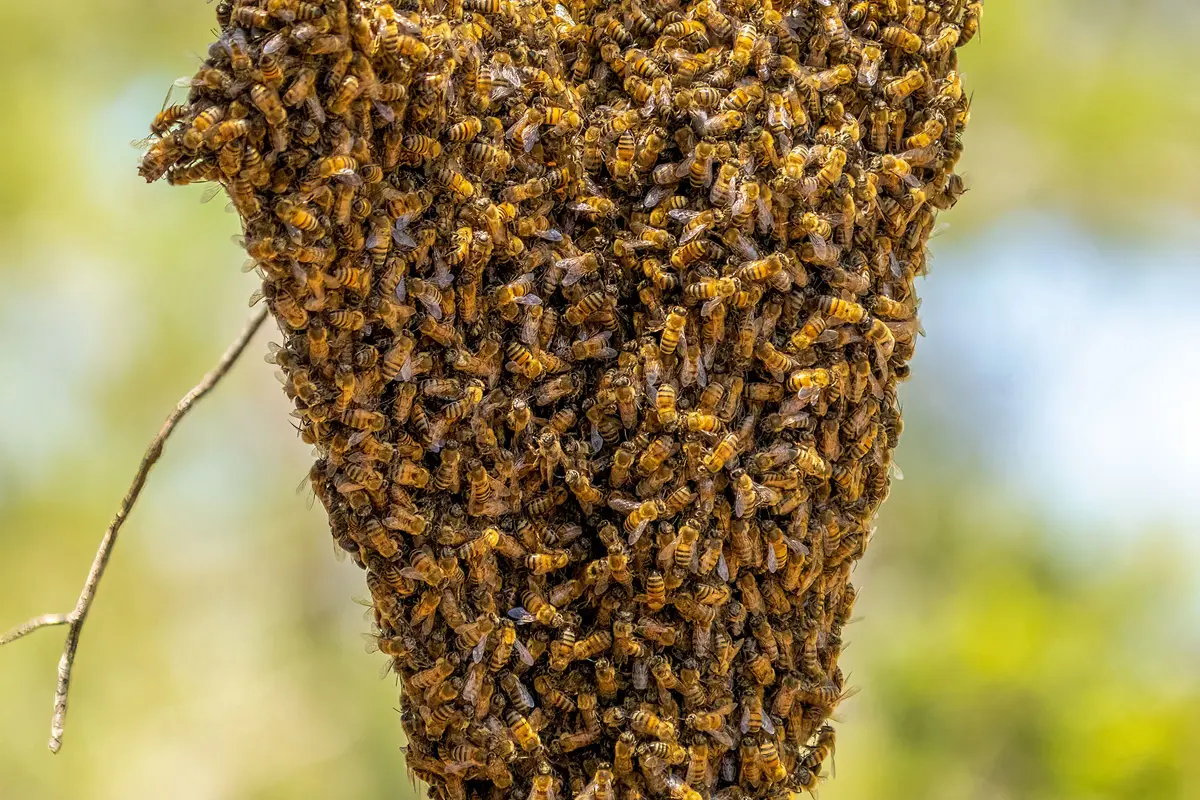
A honey bee swarm resting while scouts look for a new home. It may stay a few hours or a few days, and the next stop is often a roof or wall.
"Bees going in and out of a gap in the bricks"
A colony has moved into the wall or roof and is building comb. The comb has to come out too, or the honey draws pests and new swarms.
"Tiny black bees in the meter box"
Probably native stingless bees. They do not sting and are valuable pollinators, so we relocate the hive rather than destroy it.
Know what you are dealing with
Is It a Wasp or a Bee?
The treatment is very different, so it helps to know before we arrive. Here is how to tell them apart from a safe distance.
| Paper wasp | Honey bee | |
|---|---|---|
| Body | Slim and smooth, with a narrow waist. Brown, orange or yellow markings | Rounder, furry and golden-brown with darker bands |
| In flight | Long legs dangle below the body | Legs tucked up close to the body |
| Nest | Open grey paper comb, like an upside-down umbrella | Wax honeycomb hidden in a cavity, or a hanging cluster when swarming |
| Where in Sandgate | Eaves, pergolas, fences, letterboxes and shrubs | Tree branches, wall cavities, roof spaces and chimneys |
| Sting | Can sting again and again | Stings once and leaves the barb behind |
| Busiest | Spring to early autumn, nests largest in late summer | Swarm season from late winter to the end of spring |
Not sure what you have? Send us a photo with your enquiry and we will tell you before we book.
Local technicians
A Swarm Today Can Be a Hive in Your Wall Next Week
Swarms move on without warning, and the next stop is often a roof or wall cavity nearby. Caught early, removal is one quick visit.
Call 07 3916 7673Local conditions
Why Sandgate Has So Many Wasps and Bees
Wasp and bee calls in South East Queensland climb from the first warm weeks of spring and stay high until autumn.
Local Notes for Sandgate
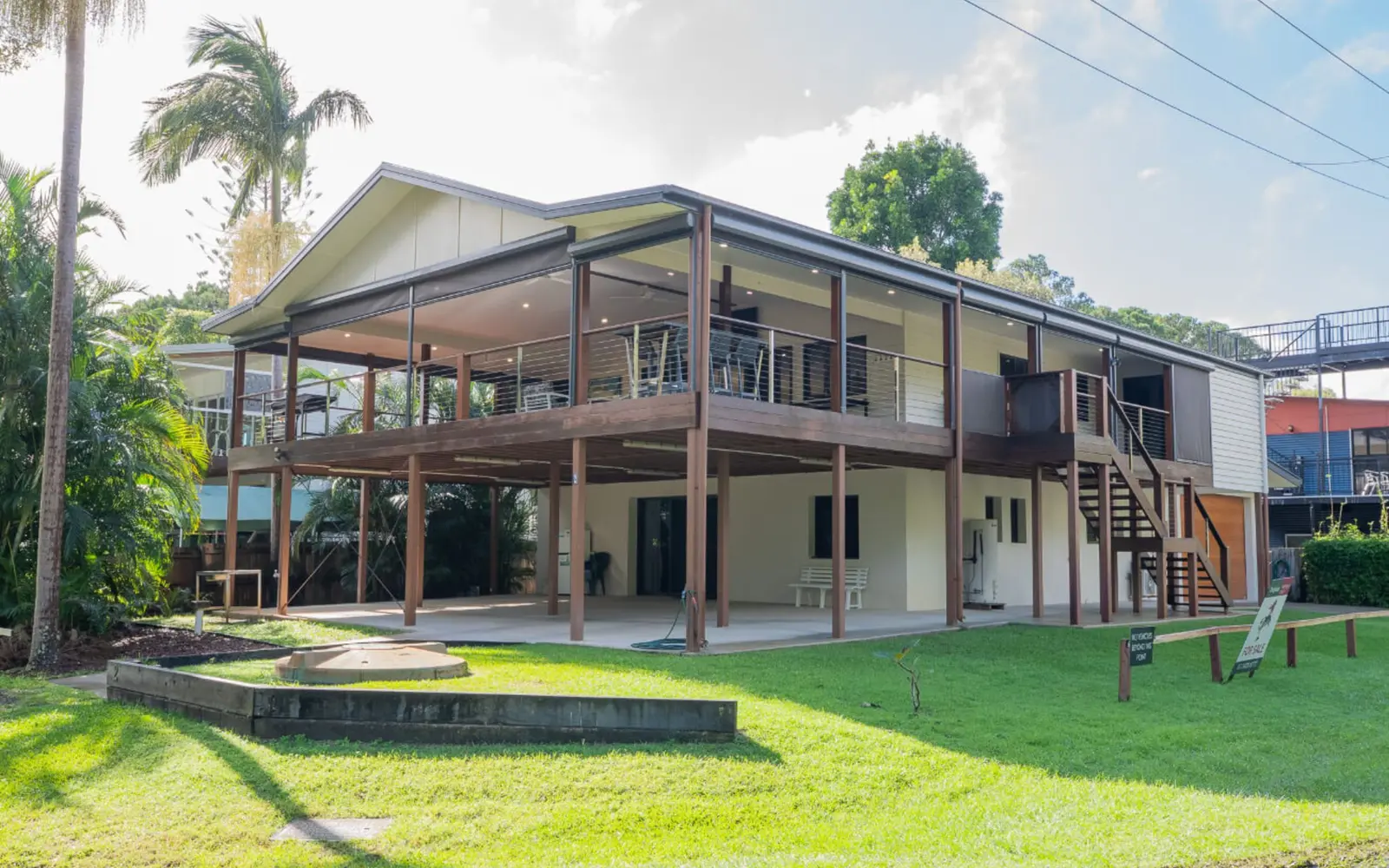
We look after homes and businesses in Sandgate, postcode 4017, about 17 km from the Brisbane CBD in North Brisbane. Older suburbs have high-set timber and post-war fibro homes, while brick lowsets and unit blocks are more common further north. Creek corridors run through the region and give rodents and possums a way to move between streets.
General pest treatments for cockroaches, ants and spiders are the most common booking, with termite inspections close behind. Rodents pick up sharply in the cooler months.
In Sandgate, paper wasp nests appear from spring and reach full size in late summer, which is when most stings happen. Bee swarms are most common from late winter through spring.
What to watch for around Sandgate
- Large cockroaches coming in from gardens and drains in summer
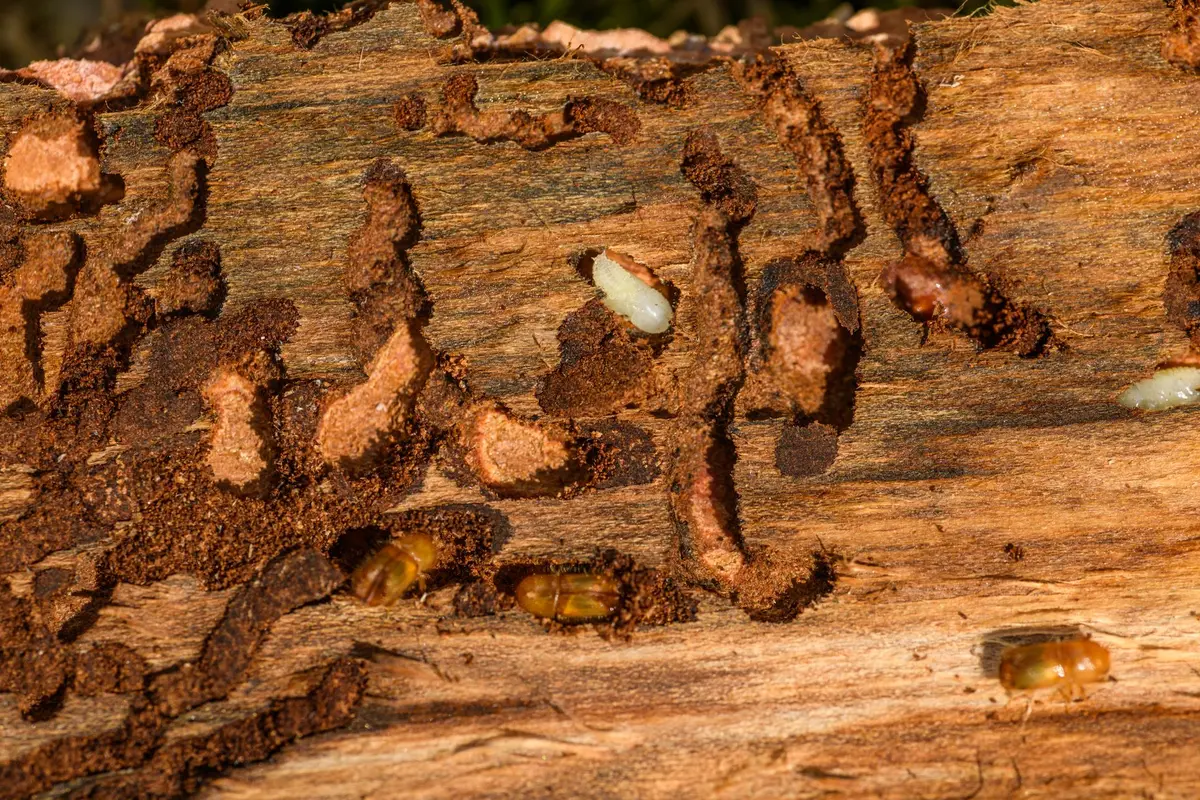
- Termites in older high-set homes and fences
- Rats and mice in roof voids from May to August
- Ants trailing indoors before and after storms
- Suburb
- Sandgate
- Postcode
- 4017
- Region
- North Brisbane
A long, warm season
In colder cities paper wasp nests die back over winter. Here the warm months run from September to April, so a nest that starts in spring has a long time to grow, and the biggest nests turn up in February and March.
Leafy gardens and covered outdoor areas
Dense hedges, pergolas, patios and wide eaves give paper wasps shelter from rain and sun, right next to where people sit, hang washing and park the car.
Spring swarm season
Honey bee colonies build up quickly when the first flowers come out in late winter and spring. When a hive runs short of space, half the bees leave with the old queen, and that swarm can land in your tree or move into your wall.
Wasp & Bee Removal calls in South East Queensland, by month
How busy each month usually is for this service.
What is at stake
Why a Nest Should Not Be Left or Sprayed
Nests do not stay small, and a can of spray rarely finishes the job.
Stings and allergies
Paper wasps attack as a group when the nest is disturbed. Multiple stings are dangerous for children, older people and anyone with an allergy.
Nests keep growing
A nest the size of a coin in October can be the size of a dinner plate by February, with many more wasps defending it.
Honey and wax damage
A bee hive left in a wall softens in the heat. Honey can seep through plaster and ceilings and attract ants and cockroaches.
They come back
Wasps away from the nest during a spray return and rebuild, and old comb tells scout bees the spot is a good place for a new hive.
How it works
How Our Wasp and Bee Removal Works
Nest found, nest out, site treated. Your technician explains each step and the price before starting.
-
1
Call or send a photo
We confirm whether it is wasps or bees, how high the nest is and whether anyone has been stung.
-
2
Same day visit
Your technician arrives in protective gear, keeps people and pets clear and finds every nest on the property.
-
3
Upfront price
You hear the price, including any ladder or access work, before anything starts.
-
4
Nest treated and removed
Wasp nests are treated and taken down. Swarms are boxed. Hives in walls or roofs are treated or removed depending on access.
-
5
Site treated and checked
The attachment point is treated to stop rebuilding, and we show you any gaps that should be sealed once activity stops.
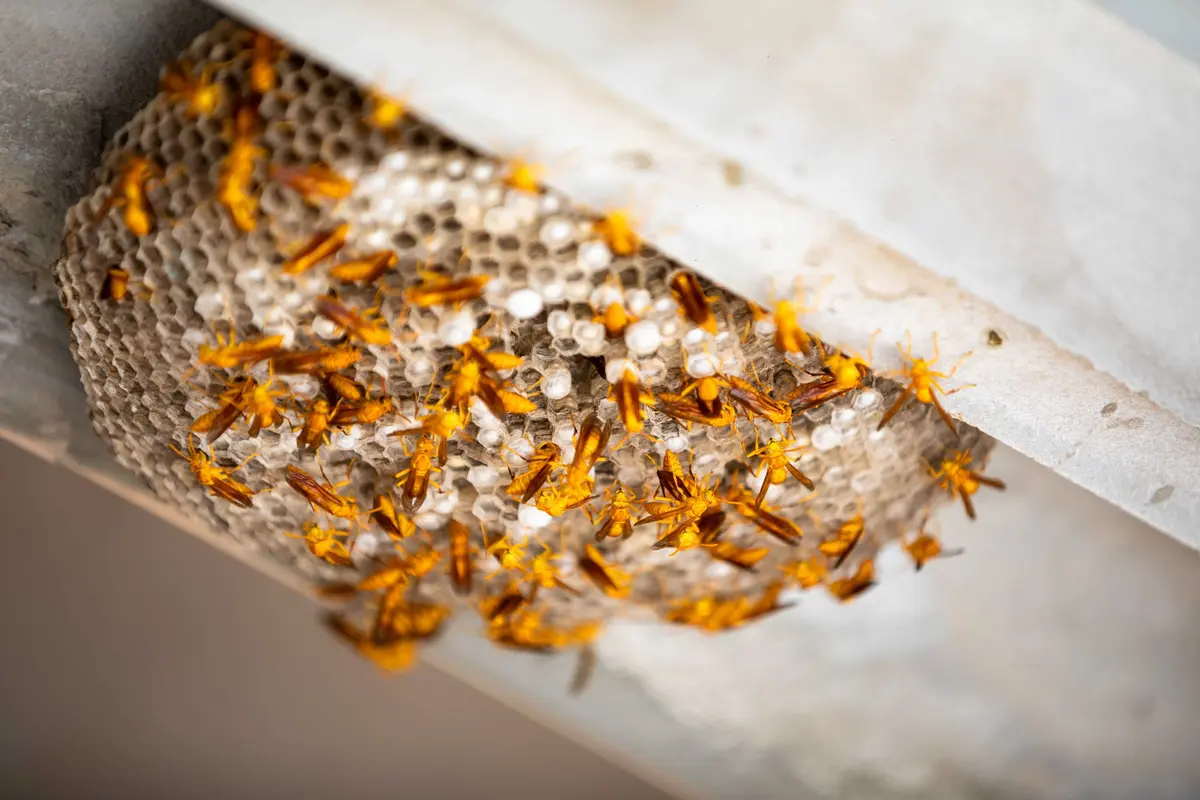
Bees are rehoused first
Honey bees and native bees pollinate Sandgate gardens. Where a swarm or hive can be reached safely, we collect it. Treatment is used only when a colony cannot be reached or is a danger to people.
Pricing
How Much Does Wasp Removal Cost in Sandgate?
A single paper wasp nest under a low eave is a quick job. A bee colony that has spent a season building comb inside a double-storey wall takes the most work. These are the things that set the price.
What sets the price
-
Wasps or bees. A wasp nest is usually quick. A settled bee hive needs more time, and sometimes comb removal.
-
Height and access. Ground level, a single-storey eave, a second-storey gutter or inside a roof space.
-
Number of nests. Several wasp nests on one property are treated in the same visit.
-
Opening the structure. Whether a tile, panel or soffit has to come off to reach a hive.
You get an upfront price once the technician has seen the job, and that is the price you pay. No hidden costs.
Why Freshify
Why Sandgate Chooses Freshify for Wasp & Bee Removal
Wasp and bee jobs come down to getting there quickly and finishing properly.
Same day service
Technicians across Sandgate, so a nest by the back door does not have to wait until next week.
Full protective gear
Bee suits, face shields and the right equipment for nests at any height.
Nest removed, not just sprayed
We take the nest down and treat the site, so returning wasps have nothing to come back to.
Upfront pricing
The price is agreed before work starts. No hidden costs at the end.
24/7 emergency line
Nests near entries, prams, schools or a person with an allergy are treated as urgent.
Bees rehoused
Honey bee swarms and native stingless bee hives are relocated wherever they can be reached.
Peace of mind
Why Households Trust Us With Wasp & Bee Removal
Letting someone into your home, roof or subfloor is a big ask. This is what you can count on from the first call.
-
You know who is coming. We confirm the technician and the arrival window before they set off.
-
You see what we found. Photos of the problem, and of any entry points or damage, before and after the work.
-
Nothing is done without a yes. The plan and the price are explained and agreed before any work starts.
-
You can call us back. If activity continues after the job, ring the same number and we come back to it.
Where we work
Wasp & Bee Removal Near Sandgate
Our technicians cover all of North Brisbane. These are the closest suburbs with their own wasp & bee removal page.
- Wasp & Bee Removal Shorncliffe
- Wasp & Bee Removal Deagon
- Wasp & Bee Removal Brighton
- Wasp & Bee Removal Boondall
- Wasp & Bee Removal Taigum
- Wasp & Bee Removal Zillmere
- Wasp & Bee Removal Bracken Ridge
- Wasp & Bee Removal Fitzgibbon

Questions
Wasp & Bee Removal Sandgate FAQs
What people ask us most before they book.
Ask us something else
Can I remove a wasp nest myself?
We do not recommend it. Paper wasps defend the nest as a group and each wasp can sting many times. Most stings we hear about happen when someone knocks a nest down with a broom or hose. A technician in protective gear can treat it safely in minutes.
How much does wasp removal cost in Sandgate?
It depends on whether it is wasps or bees, how high the nest is, how many nests there are and whether a wall or roof has to be opened. The technician gives you an upfront price before any work starts, with no hidden costs.
How quickly can you get to Sandgate?
We offer same day service in Sandgate for most wasp and bee jobs, and treat a nest near a doorway, play area or anyone with an allergy as urgent. Phones are answered 24/7.
Will you kill the bees?
Not if we can avoid it. Swarms and accessible hives are collected or relocated where practical. If a colony is deep inside a wall or roof and cannot be reached, treatment may be the only safe option, and we will explain that before going ahead.
There is a swarm of bees in my tree. What should I do?
Keep children and pets away and do not spray or hose it. Swarming bees are usually calm because they have no hive to defend. Many swarms move on within a day or two. If it stays, or it is close to the house, call us before it moves into a wall or roof.
Do wasps come back to the same spot?
They can. Wasps that were away from the nest during treatment return and may try to rebuild, and a sheltered eave that suited one queen will suit another next spring. We treat the site to discourage that.
Are European wasps a problem in Queensland?
European wasps are rarely seen in Queensland. Nearly every nest we remove around Sandgate belongs to a native paper wasp. If you see stout, bright yellow and black wasps nesting in the ground or a wall, tell us, because they need to be reported.
Should native bees be removed?
Usually not. Native stingless bees do not sting and are important pollinators. If a hive is somewhere it cannot stay, such as a water meter box, we relocate it rather than destroy it.
A Small Nest Today Is a Big One by February
Wasp nests grow all summer and bee swarms move into walls within days. Call now for same day service and an upfront price.
More services
Other Services in Sandgate
-
 Pest Control Sandgate
-
 Termite Inspection Sandgate
-
 Possum Removal Sandgate
-
 Rat & Mouse Control Sandgate
-
 Cockroach Control Sandgate
-
 Ant Control Sandgate
-
 Spider Control Sandgate
-
 Dead Animal Removal Sandgate
-
 Bed Bug Treatment Sandgate
-
 Flea Treatment Sandgate
-
 Bird Control Sandgate
-
 End of Lease Pest Control Sandgate