
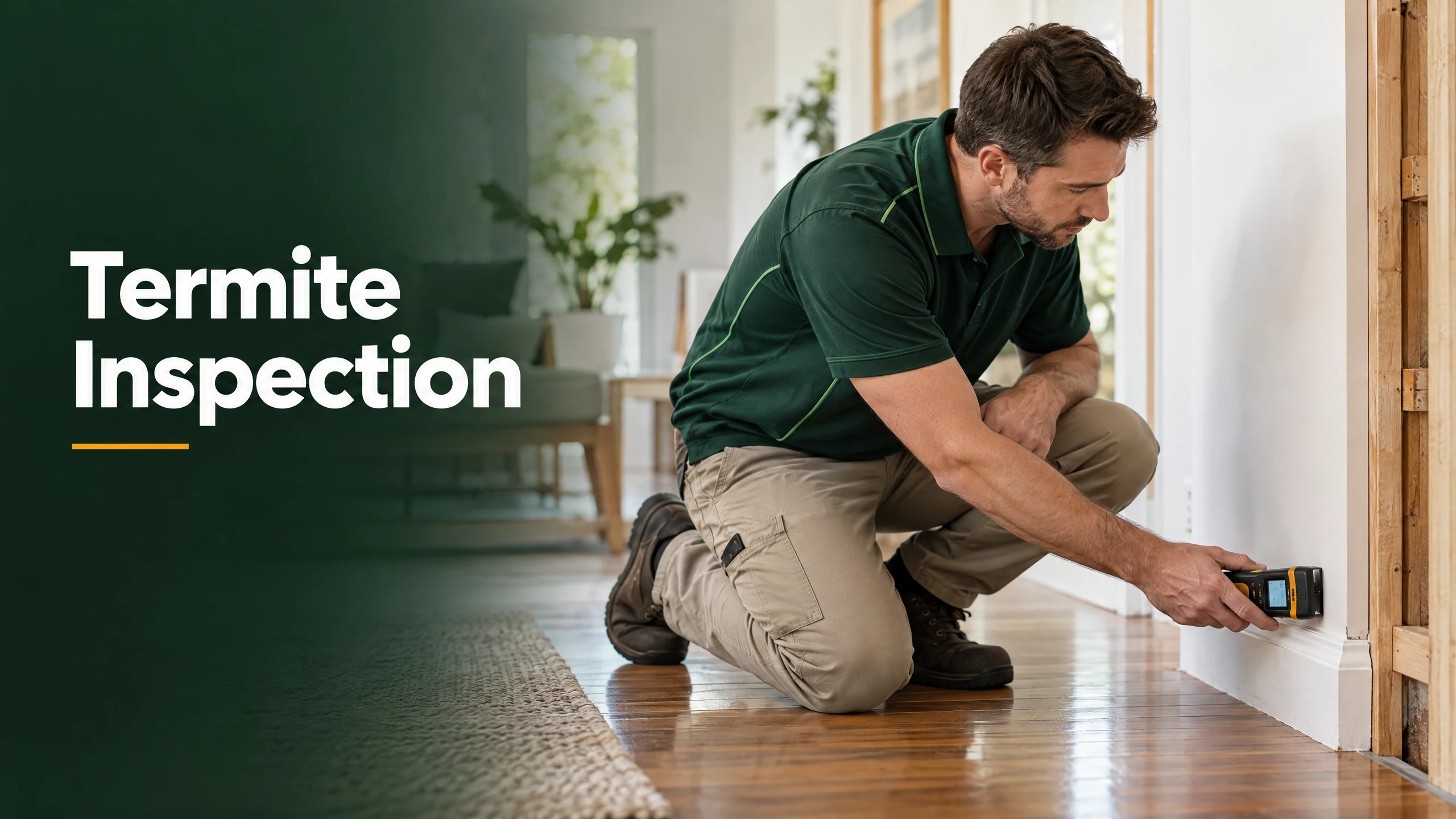
Termite inspections, same day on most days
Termite Inspection Parkwood
Parkwood is a family suburb near the Gold Coast University Hospital, with a golf course and quiet streets. A timber pest inspection checks your Parkwood home from the roof timbers to the stumps or slab edge, and the yard around it, then gives you a written report with photos.
Buying in Parkwood? Give us the contract dates and we will fit the pre-purchase report in before they run out.
- Roof void, rooms, subfloor and yard
- Thermal camera and moisture meter
- Photo report you can read
- Inspection price confirmed at booking
Get a Quote
Tell us what you have seen and we will call you back.
- the recommended inspection gap
- Yearly
- when swarms are most common
- Oct–Feb
- suburbs covered
- 367
- phones answered
- 24/7
Right now
Think You Have Termites? Start Here
In Parkwood termites are usually found by accident: a skirting board that gives under the vacuum, mud on a stump, or a pile of wings on the window sill after a humid night.
What you do in the next day or two makes a difference. Termites that are disturbed retreat, then come back somewhere harder to reach.
-
1
Do not break into it
Leave mud tubes, damaged timber and soft spots exactly as you found them. Live termites in place let us treat the colony.
-
2
Put the spray can down
Surface sprays kill the workers they touch and send the rest into hiding. The colony keeps feeding out of sight.
-
3
Get some photos
Take photos of the mud, damage or winged insects. A few flying ones in a sealed jar help with identification.
-
4
Stop any leaks
Fix dripping taps, hot water overflows and air conditioner drains near the spot. Termites depend on moisture.
-
Then call us on 07 3916 7673. Answered day and night, with same day visits on most days.
What we do
Termite Services in Parkwood
From the yearly check to treating an active colony and protecting the home afterwards, each step is priced before it starts.
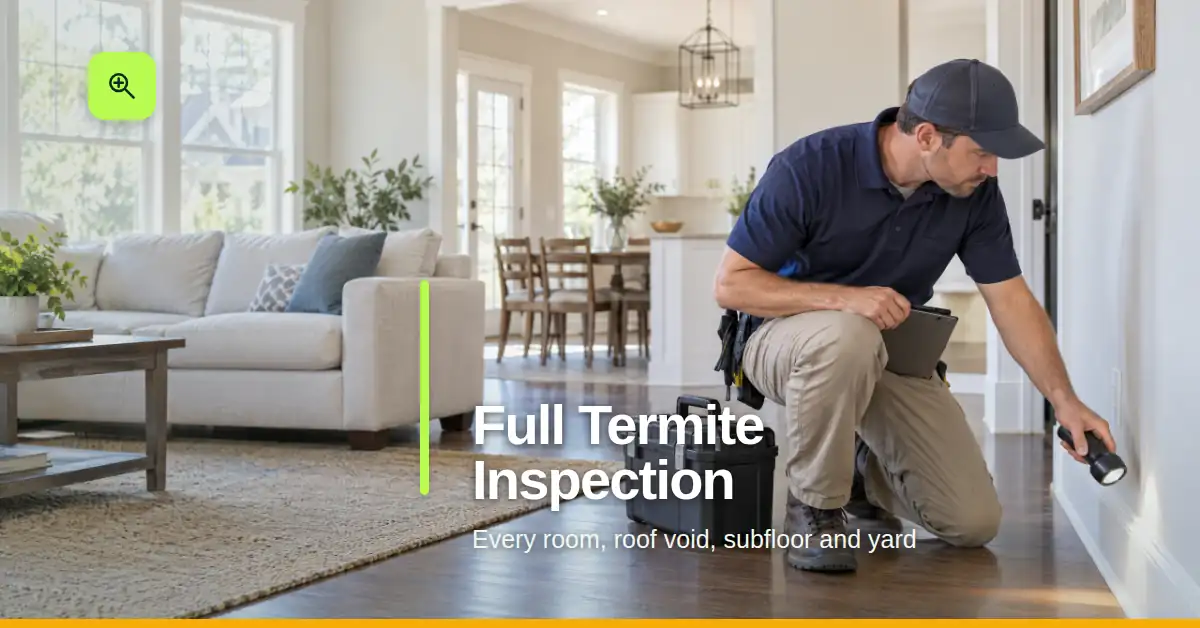 Full Termite InspectionSubfloor, roof void, interior, fences and garden
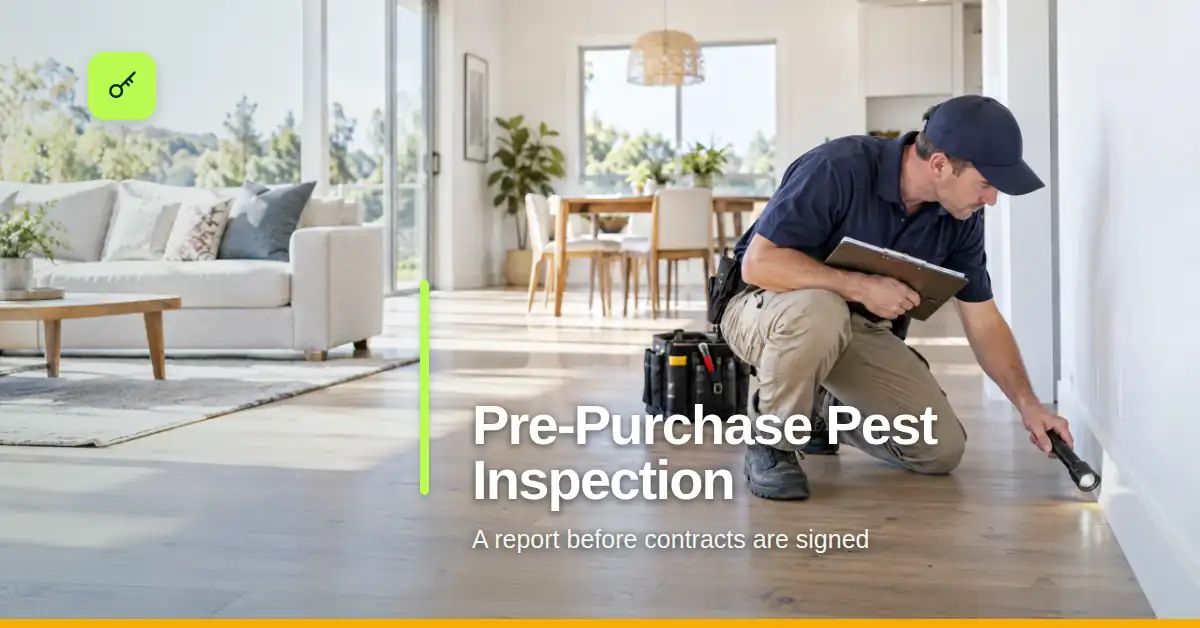 Pre-Purchase Pest InspectionKnow what you are buying before you sign
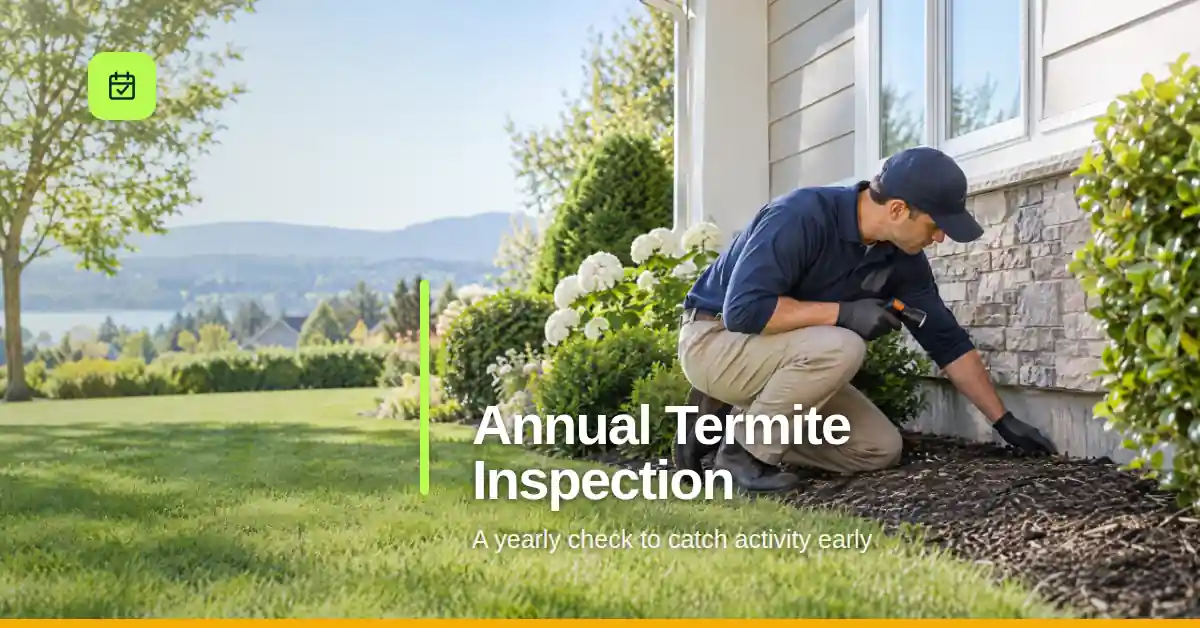 Annual Termite InspectionThe yearly check we recommend for every home
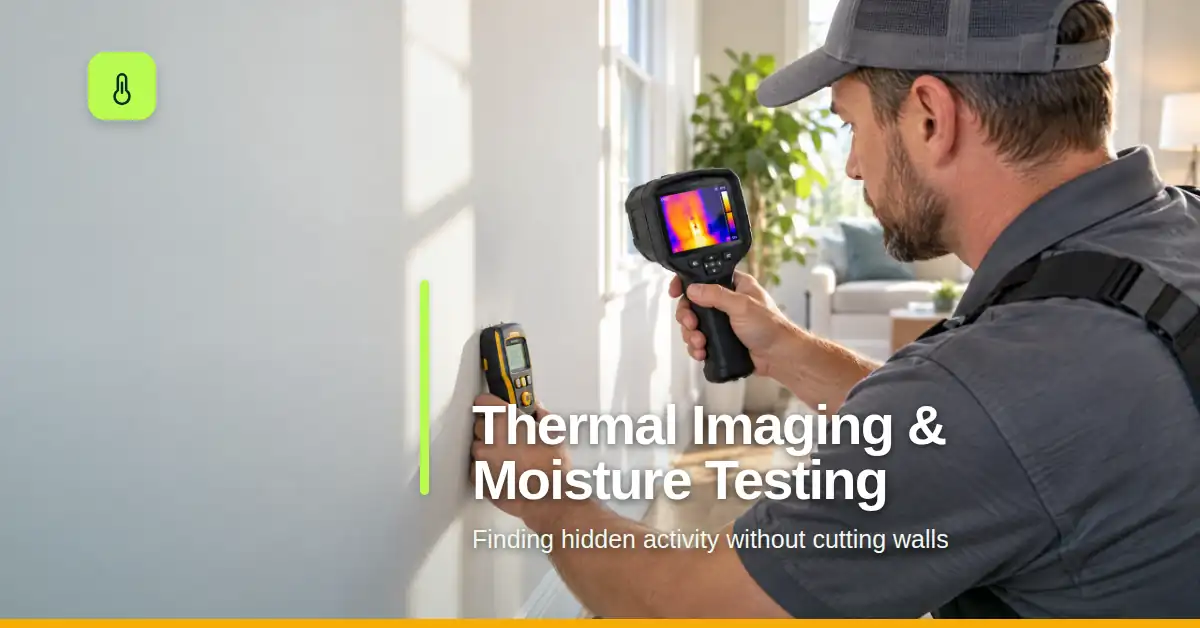 Thermal Imaging & Moisture TestingActivity found behind walls without cutting holes
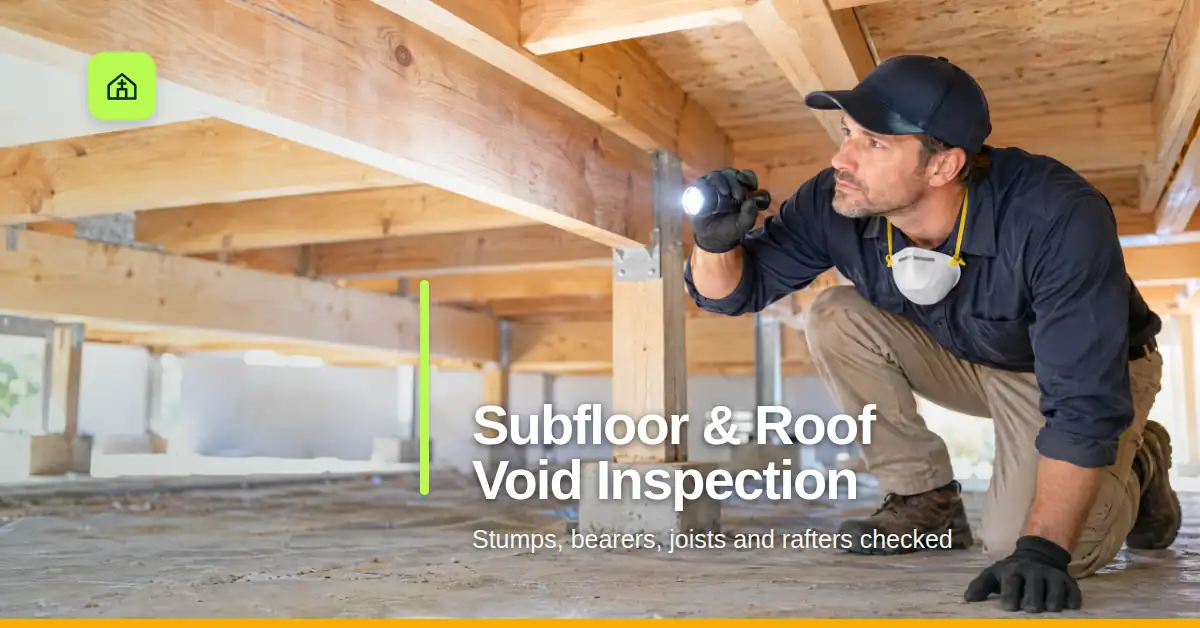 Subfloor & Roof Void InspectionStumps, bearers, joists and roof timbers checked
 Written Termite ReportFindings, photos, risk areas and next steps
 Termite Treatment PlansDusting, foaming and baiting of live activity
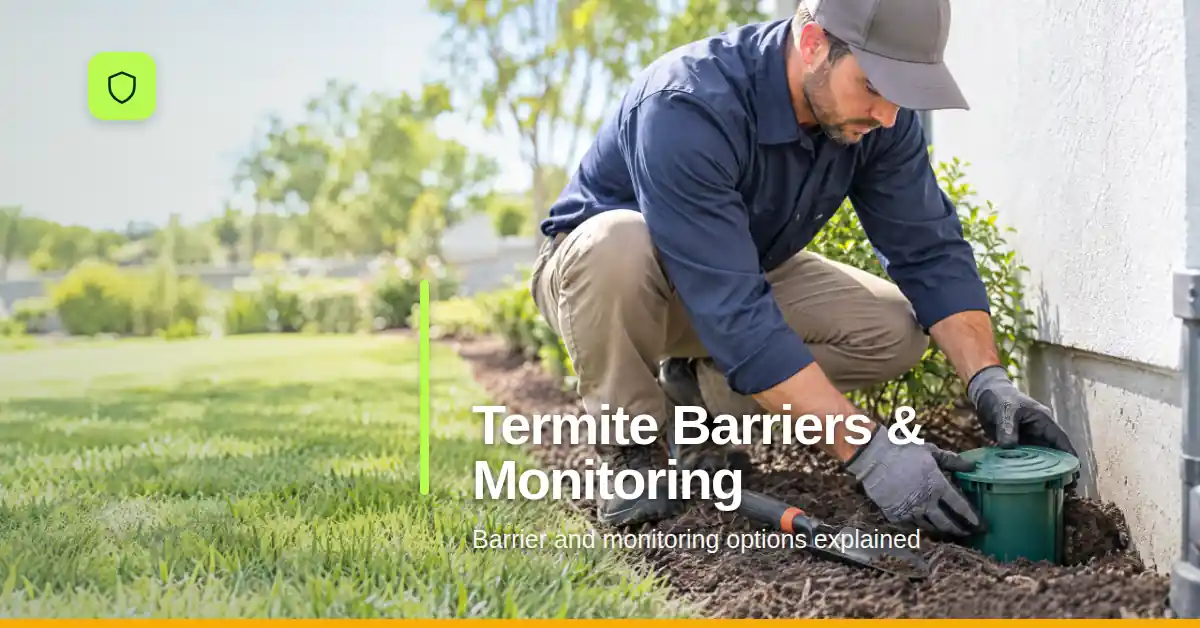 Termite Barriers & MonitoringSoil treatments and bait stations around the home
 Commercial & Strata InspectionsShops, offices, schools and unit blocks
Sound familiar?
Signs Parkwood Homeowners Notice First
Termite damage stays hidden for a long time. These are the clues Parkwood homeowners usually spot first.
"Thin mud lines up the wall or stump"
Pencil-width tunnels of soil let termites travel from the ground into the house without drying out.
"The door frame sounds hollow"
Timber that sounds papery when tapped may be eaten out behind a thin skin of paint.
"Wings all over the window sill"
A swarm of winged termites, then a pile of dropped wings, means a mature colony close by.
"Paint bubbling with no leak"
Termites carry moisture into walls. Rippled paint or plaster can mean activity right under the surface.
"The floor feels springy"
Soft or sagging floors can mean termites have reached the bearers and joists underneath.
"We have not had an inspection in years"
Most of the damage we find is in homes that have gone several years without a check.
Know what you are dealing with
Flying Termites or Flying Ants?
After a humid evening both can turn up around the lights. These differences tell you which one you are looking at.
| Termite | Ant | |
|---|---|---|
| Body shape | Thick, straight waist | Narrow, pinched waist |
| Antennae | Straight and beaded | Bent like an elbow |
| Wings | Four wings of equal length, dropped soon after landing | Front pair longer than the back pair |
| Workers | Soft, pale cream bodies | Hard brown, black or red bodies |
| Where you find them | Inside timber, soil and mud tubes, away from light | Out in the open on benches, paths and walls |
| Food | Timber, paper and other cellulose | Sugar, grease and other insects |
Trails of ants across the kitchen instead? Ant Control
Local technicians
Found Early, Termites Are a Treatment. Found Late, a Rebuild.
We inspect homes near the Parkwood International golf course and Olsen Avenue all year round. A yearly check costs a fraction of a single repair.
Call 07 3916 7673Local conditions
Termite Risk Around Parkwood
Termite pressure across South East Queensland is high, and Parkwood homes share that risk.
Local Notes for Parkwood
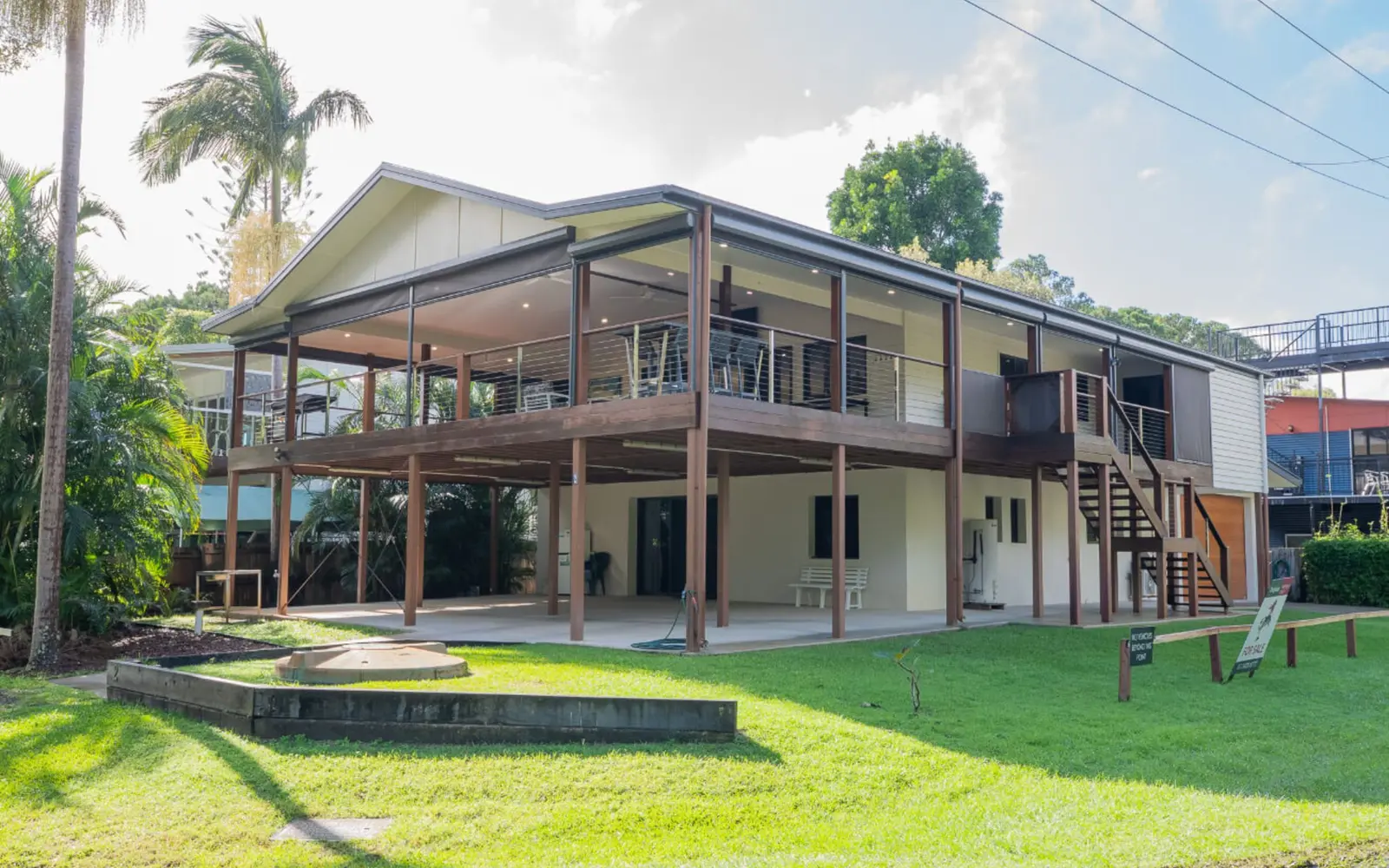
Parkwood sits in Gold Coast, about 64 km from the Brisbane CBD. Our technicians are in the 4214 postcode regularly. Brick lowsets from the 1980s and 1990s, many with pools.
Termites, possums and spiders are the main calls in Parkwood.
On a Parkwood inspection we spend extra time where the house meets the ground: stumps and ant caps, slab edges and weep holes, and any additions, paths or garden beds built against the walls. Parkwood homes should keep garden beds below the weep holes to reduce termite risk.
What to watch for around Parkwood
- Termites in slab homes and landscaping
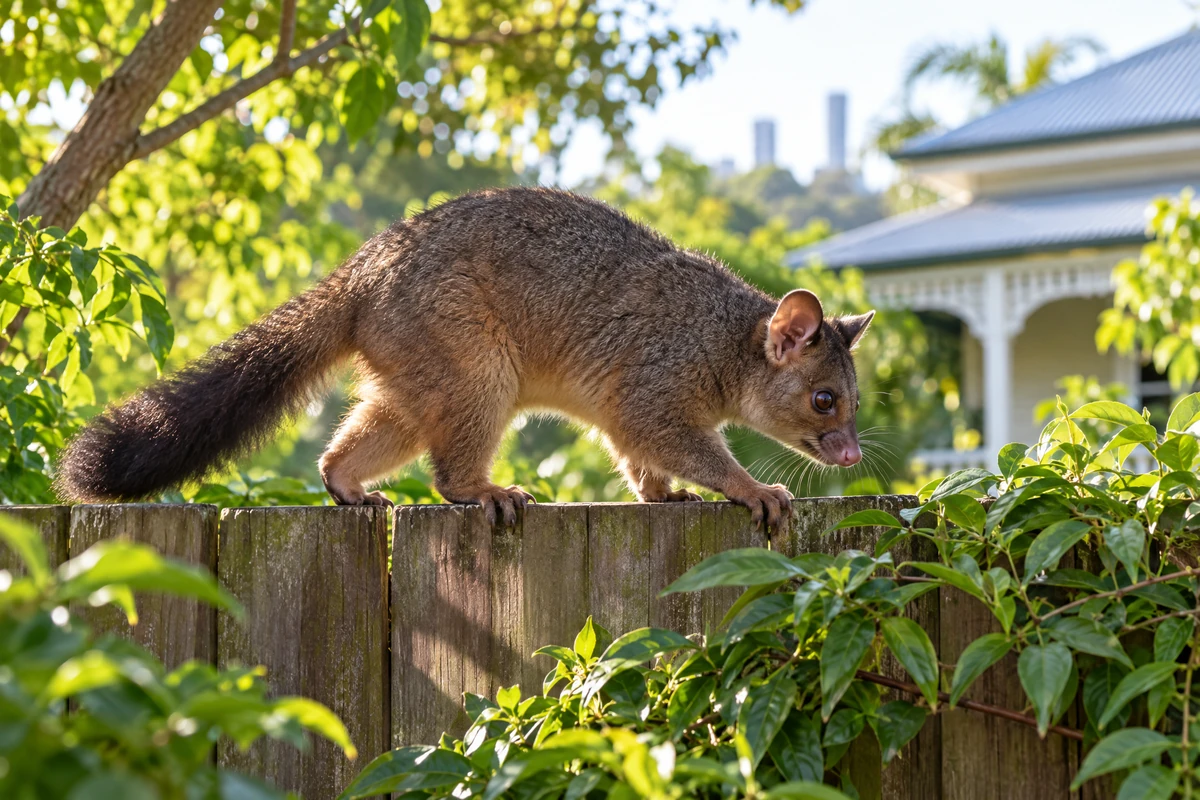
- Possums in roofs near big trees
- Spiders around pools
- Ants in lawns
- Suburb
- Parkwood
- Postcode
- 4214
- Region
- Gold Coast
- Local landmarks
- the Parkwood International golf course and Olsen Avenue
Warm, wet weather
Subterranean termites need warmth and moisture. Coptotermes and Schedorhinotermes species nest in trees, stumps and soil and tunnel underground to reach homes.
Every type of home is a target
Timber homes on stumps are easy to reach, but slab homes are hit too, through slab joints, pipe penetrations and weep holes covered by garden beds.
Landscaping against the house
Mulch, sleepers, raised garden beds and paving laid over the barrier give termites a hidden route into the walls.
Termite Inspection calls in South East Queensland, by month
How busy each month usually is for this service.
What is at stake
Why Termites Need a Professional Response
A mature colony can hold hundreds of thousands of workers, feeding around the clock.
Hidden structural damage
Bearers, joists, studs and roof timbers can be eaten hollow before anything looks wrong.
Repairs fall to the owner
Termite damage is rarely covered, so the repair bill is usually yours.
The surface looks fine
Termites leave the outer skin of the timber alone, which keeps the damage out of sight.
DIY sprays backfire
Spraying scatters the colony to another part of the house, where it is harder to treat.
How it works
What Happens on Inspection Day
An average home takes one to two hours. You hear the findings before we leave and get the written report soon after.
-
1
Booking questions
The age and build of the home, any past treatment, and how to get into the roof void and subfloor.
-
2
Inside the home
Skirtings, frames, wet areas, cupboards and roof timbers are sounded, moisture tested and scanned.
-
3
Underneath and outside
Stumps, slab edges, weep holes, fences, trees, retaining walls and garden beds checked for activity.
-
4
Walk-through of findings
We show you any live termites, old damage and conditions that raise the risk.
-
5
Report and options
A written report with photos. If treatment is needed, each option has a fixed price.
Treat the colony, then protect the home
If termites are active, the colony is dealt with first using dust, foam or bait. Then the building is protected with a treated zone or a station system.
Pricing
Termite Inspection Prices in Parkwood
The inspection has a set fee that we confirm when you book. If treatment is needed, it is priced once we know the species, the location and the construction.
What sets the price
-
How the home is built. A high-set home with a full subfloor takes longer than a single-level slab home.
-
Access. Low roof voids, tight subfloors and stored goods against walls all add time.
-
Type of report. A pre-purchase report also covers borers and wood decay.
-
Any treatment. Colony treatment, a soil zone or a station system are each priced separately.
You get an upfront price once the technician has seen the job, and that is the price you pay. No hidden costs.
Why Freshify
Why Parkwood Chooses Freshify for Termite Inspection
What you get when our technician inspects your Parkwood property.
Nothing skipped
Roof void, rooms, subfloor and the whole yard, every time.
Proper tools
Moisture meter, sounding tools and a thermal camera.
A report in plain English
Clear findings with photos and the next steps.
Upfront pricing
A set inspection fee, fixed treatment prices, no hidden costs.
Around your dates
Pre-purchase reports fitted into your cooling-off period.
Phones answered 24/7
Found termites on a Sunday night? Call and speak to a person.
Peace of mind
Why Households Trust Us With Termite Inspection
Letting someone into your home, roof or subfloor is a big ask. This is what you can count on from the first call.
-
You know who is coming. We confirm the technician and the arrival window before they set off.
-
You see what we found. Photos of the problem, and of any entry points or damage, before and after the work.
-
Nothing is done without a yes. The plan and the price are explained and agreed before any work starts.
-
You can call us back. If activity continues after the job, ring the same number and we come back to it.
Where we work
Termite Inspection Near Parkwood
Our technicians cover all of Gold Coast. These are the closest suburbs with their own termite inspection page.
- Termite Inspection Arundel
- Termite Inspection Molendinar
- Termite Inspection Gaven
- Termite Inspection Labrador
- Termite Inspection Ashmore
- Termite Inspection Southport
- Termite Inspection Pacific Pines
- Termite Inspection Biggera Waters

Questions
Termite Inspection Parkwood FAQs
What people ask us most before they book.
Ask us something else
How often does a Parkwood home need a termite inspection?
At least every 12 months. Homes with past activity, bushland close by, or features that hide entry points such as raised garden beds may need one every six months. Your report recommends the right gap for your home.
What pests are most common in Parkwood?
Termites, possums and spiders are the main calls in Parkwood.
What should Parkwood homeowners look out for?
The things we find most often around Parkwood are termites in slab homes and landscaping, possums in roofs near big trees, spiders around pools and ants in lawns. Parkwood homes should keep garden beds below the weep holes to reduce termite risk.
How much is a termite inspection in Parkwood?
There is a set fee based on the size and construction of the home and whether it is a pre-purchase report. We confirm the price when you book. Any treatment is quoted separately with a fixed price.
How long does the inspection take?
One to two hours for most homes. Large homes, homes on stumps and properties with sheds, granny flats or a lot of garden timber take longer.
What if you find live termites?
We show you where they are, identify the species and explain the options with prices. The colony is usually treated first, then the building is protected with a treated soil zone or a bait station system.
Do new homes need inspections too?
Yes. Barriers in new homes are there to force termites into the open where an inspection can find them. They do not make a home termite proof, so a yearly inspection is still needed.
Can I get a pre-purchase inspection quickly?
Yes. Tell us the contract dates when you book and we will schedule the inspection and report so it reaches you before your cooling-off period ends.
Protect Your Parkwood Home From Termites
Call to book an inspection or send the form. We confirm the price when you book.
More services
Other Services in Parkwood
-
 Pest Control Parkwood
-
 Possum Removal Parkwood
-
 Rat & Mouse Control Parkwood
-
 Cockroach Control Parkwood
-
 Ant Control Parkwood
-
 Spider Control Parkwood
-
 Wasp & Bee Removal Parkwood
-
 Dead Animal Removal Parkwood
-
 Bed Bug Treatment Parkwood
-
 Flea Treatment Parkwood
-
 Bird Control Parkwood
-
 End of Lease Pest Control Parkwood